Category: News

Future Leader Alumni Raise $14,000 for Seafood Industry Research at SENA

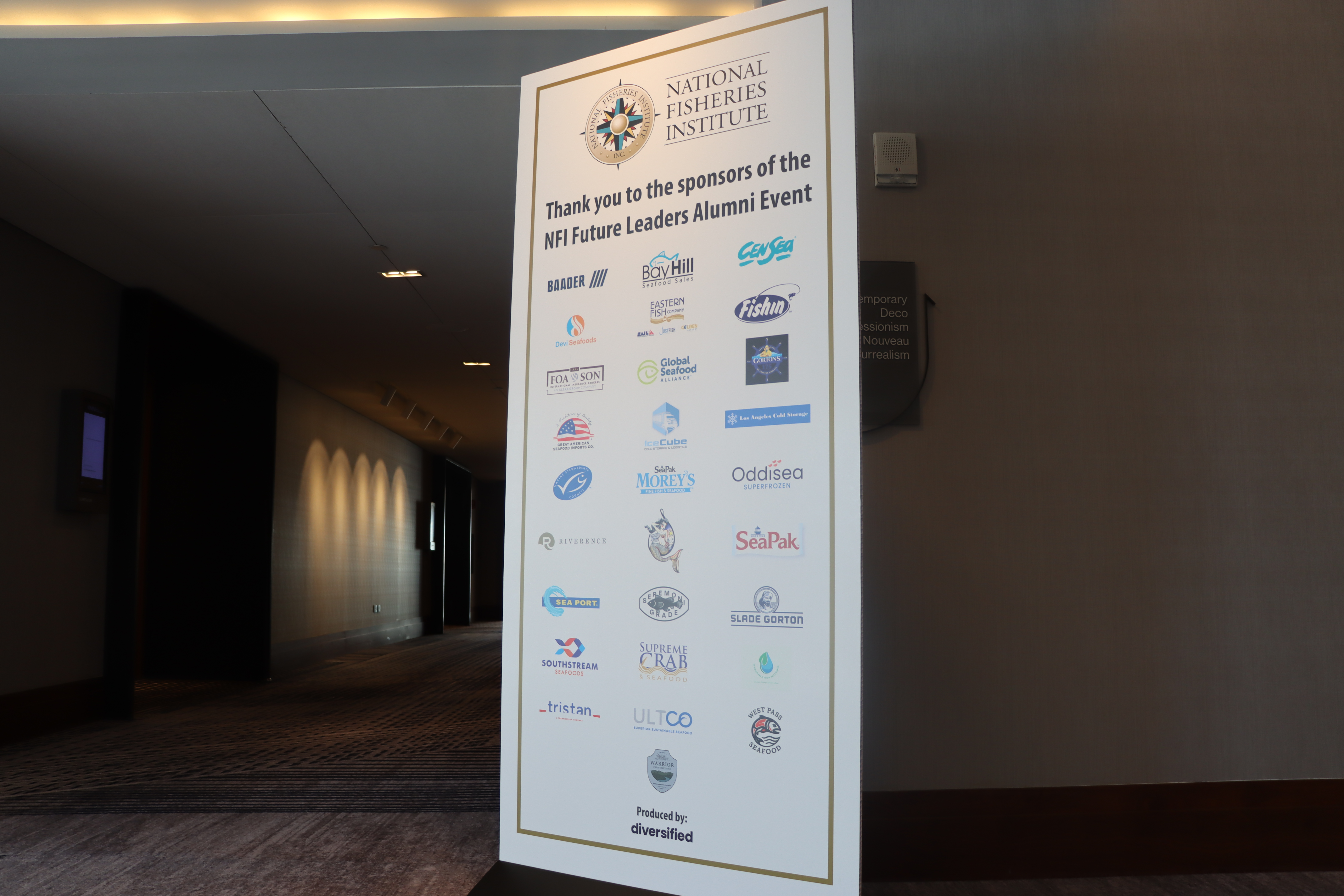
Reston, VA – March 26, 2026 – The National Fisheries Institute’s (NFI) Future Leader (FL) Alumni raised $14,000 during their annual networking event held at Seafood Expo North America (SENA).

Proceeds from the event will support the Seafood Industry Research Fund (SIRF) as well as the Wallace R. “Wally” Stevens Living Tribute Fund, both of which fund scientific research across the seafood sector.

Wally Stevens, whose legacy the tribute fund honors, is widely recognized as a leader in the industry. With more than 47 years of experience, Stevens held key roles at organizations including the Global Aquaculture Alliance (GAA), Slade Gorton, Ocean Products, and Booth Fisheries. A U.S. Army veteran who served during the Vietnam War, Stevens later played a pivotal role in expanding GAA and advancing its Best Aquaculture Practices certification program. He also served as Chairman of NFI, co-founded the Future Leaders Program, and was inducted into the Boston Seafood Hall of Fame.

Since its inception, the Future Leader Alumni network has raised more than $141,000 to support research focused on seafood safety, nutrition, and sustainability.

NFI thanks the companies whose support made this year’s event possible:

BAADER 

Bay Hill Seafood 

CenSea 

Devi Seafood 

Eastern Fish Company 

Foa & Son 

Global Seafood Alliance (GSA) 

Gorton’s Great American Seafood Import Co. 

Ice Cube Cold Storage 

LA Cold Storage 

Marine Stewardship Council (MSC) 

Oddisea SuperFrozen 

Rich Products Corporation/Morey’s 

Riverence 

Seafood Ninja Inc. 

Sea Port Products 

Shinkei Systems 

Slade Gorton & Company 

Southstream Seafoods ($1,000) 

Supreme Crab 

Sustainable Food Solutions 

The Fishin’ Co 

Tristian International 

Ultco LLC 

Warrior Food Solutions 

West Pass Seafood

SIRF Hosts Its 12th Annual Benefit Soirée

The Seafood Industry Research Fund (SIRF) Board of Directors hosted the 12th Annual SIRF Benefit Soirée on Monday, January 19, 2026, at the Diplomat Beach Resort in Hollywood, Florida. The elegant evening celebrated our shared commitment to advancing the seafood industry’s future through innovation and research.

The night began with a cocktail reception at 7:15 p.m., followed by a plated dinner at 8:00 p.m.

Guest Speaker Dr. Norbert Kaminski, Professor and Director of the Institute for Integrative Toxicology at Michigan State University, presented his latest research findings on the consumption of plastic particles through seafood. The presentation sparked meaningful dialogue among seafood industry leaders, partners, and friends.

Following Dr. Kaminski’s presentation, SIRF Chairman Sean O’Scannlain provided an update on SIRF-sponsored grants, including:

  • Non-destructive detection of halibut quality
  • Strategies to increase seafood consumption among participants in the Women, Infants, and Children (WIC) program
  • An economic assessment of the potential impact of proposed shipbuilding fees on the industry
  • Exploring the feasibility of bio-packaging development
  • Ongoing efforts to secure FDA approval for finfish irradiation

The Soirée raised $29,800 in pledged donations, thanks to the generosity of dinner guests who enjoyed a memorable evening supporting seafood science and sustainability.

Special Thanks

SIRF extends heartfelt gratitude to its Board of Directors and long-time Sponsors whose dedication made this year’s soirée possible:

  • Sean O’Scannlain, Fortune International — Chair & Director
  • Lisa Wallenda Picard, National Fisheries Institute — Secretary & Treasurer
  • Jim Bonvie, Seafax — Director
  • Dan DiDonato, Unit Cold Storage — Director
  • Bill Dresser, Sea Port Products — Director
  • Brenna Hensley, Diversified — Director
  • Jordan Mazzetta, Eddie M’s — Director
  • Russell Mentzer — Director
  • Larsen Mettler, S2G Ventures — Director
  • Christine Ngo, H & N Group — Director
  • Ben Schwartz, Harbor Seafood — Director
  • Jeff Stern, CenSea — Director
  • Mike Walsh, Northwest Seafoods — Director
  • Jason Mulvihill, Lineage — Director
  • Tom Mazzetta, Mazzetta Company – Sponsor
  • Barry Markman, Mark Foods – Sponsor
  • Mark Soderstrom, Southstream Seafoods – Sponsor          
  • Ryan Clark, The Town Dock — Sponsor

We look forward to welcoming everyone to the 13th Annual SIRF Benefit Soirée in Scottsdale, Arizona!

Dr. Kevin E. Mis Solval: research grant recipient presents at the Institute of Food Technologists

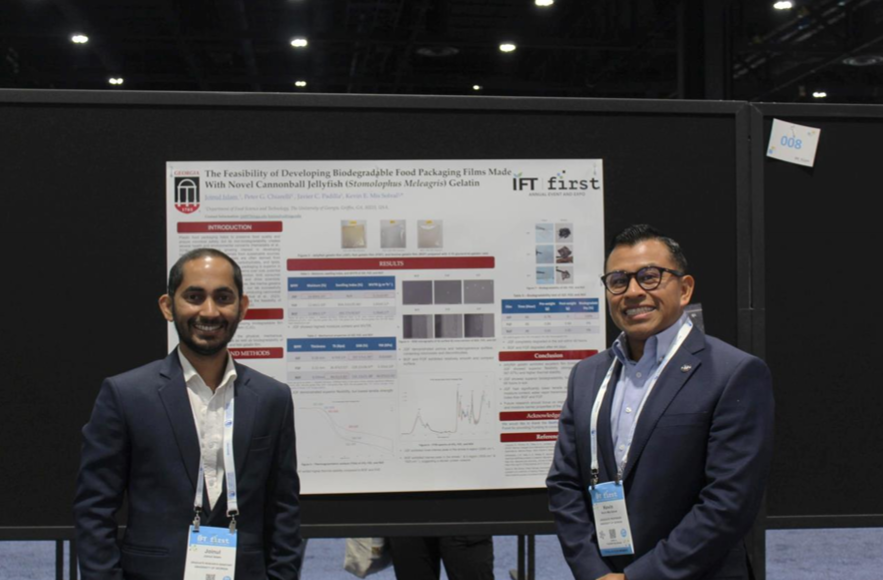
The Seafood Industry Research Fund (SIRF) is always happy to see its research grant recipients thriving in the field. Dr. Kevin E. Mis Solval, a recent grant recipient, and his team recently presented preliminary findings at the July Institute of Food Technologists (IFT) conference in Chicago.  

Mis Solval and his graduate research assistant, Joinul Islam, have been working on bioplastic production from seafood byproducts. Their aim is to determine the feasibility of producing sustainable bioplastics from underutilized collagen-rich and chitin-rich seafood by-products from shrimp, catfish, and jellyfish.  

Presenting at IFT allowed them to introduce their methods and results in a succinct poster and connect with industry members.  

“For me, [it’s about] going out there, getting in contact with the general public, with our funding agencies, reaching out to my scientific community and kind of spreading this new knowledge that we have generated,” Mis Solval said. “Going to IFT is one of the platforms that allows me to do that.”  

There are still goals Mis Solval is working toward in the study. Presenting at IFT helped lead these next steps.  

“The idea was to engage with other scientists at the conference to gather ideas like how we can improve the quality of these bioplastics, how we can improve mechanical properties, thermal properties, and the degradation properties of these materials,” Mis Solval said. “By doing that, we also wanted to identify what would be the best applications for this type of biomaterials that we are developing.”  

It will be exciting to continue to watch where Mis Solval and his team go next!  

By Maia LeClair, SIRF Intern

Christina Dewitt and Angee Hunt discuss the potential for early detection of chalky halibut with bioimpedance

Wild-caught halibut is experiencing a rise in a quality related defect that affects its market reputation. Consumers will order expensive halibut from restaurants, and the fish sometimes comes out nearly inedible. Why? This is due to a problem with the meat itself. “Chalkiness” of the meat has increased in recent years and may be due to both warming waters and stress placed on the fish during capture.  

Chalky halibut is a phenomenon where the protein inside the halibut becomes denatured. This results in a white, opaque appearance to the fillet, as opposed to the shininess consumers are used to. The meat itself often tastes tough and dry. However, it’s almost undetectable while undergoing processing and the ability to detect chalky halibut before it is served is difficult. Processors currently rely on pH tests, but the results can be inconsistent.  

Christina Dewitt, Director of the Seafood Research and Education Center at Oregon State University (OSU), and Angee Hunt, Assistant Professor at OSU, are working on a project together that can potentially help detect chalky halibut before it gets to the consumer.   

“I started looking into chalky halibut and began to understand the muscle chemistry of what was happening and why it was happening,” Dewitt said. “Chalky halibut might be caused by extreme stress—rapid lactic acid production. One of the ways that they detect chalky halibut is by measuring pH. There’s been some studies where they stress fish and they’ve demonstrated they can produce chalky halibut in those fish, and found that the pH of the meat is abnormally low as a result of that.”  

Dewitt and Hunt’s work, however, centers around the technology of bioimpedance. Bioimpedance is a non-invasive, rapid tool that sends out electrical currents that can detect certain qualities within a body, in this case, a fish’s body. For example, the equipment can detect tissue composition and function.  

“Typical bioimpedance is based on a technology that uses two different frequencies of electricity, and then they can use the resistance that occurs between those emitted frequencies to basically determine different things like the amount of fat content or the amount of degradation that’s occurring in the cell,” Dewitt said.  

Both Dewitt and Hunt will be traveling to Kodiak, Alaska, this summer to scan wild halibut for chalkiness using a bioimpedance device. In this study, alongside the current technology of pH detection, Dewitt is hopeful bioimpedance will prove more reliable. 

“We want to scan the fish [in Alaska] using our device,” Dewitt said. “We’ll probably scan it in a couple of different areas, and then they’re going to be collecting pH data on the fish. What we’re hoping is that when they pick it up using pH, we can definitely pick it up also [with bioimpedance]. We want to show that correlation, that the device can pick it up when it’s obvious.” 

For Hunt, she is looking forward to working directly with fishers and processors in Alaska. 

“This opportunity enables researchers to better understand the day-to-day challenges and identify opportunities for collaboration between industry and academia,” Hunt said.  

Next, their studies in Alaska will involve collecting data to correlate with the data that shows muscle degradation. Multi-frequency bioimpedance sensors can make it possible to capture shifts in electrical properties across a spectrum and detect tissue changes over time. Current commercial grade bioimpedance technology uses just one frequency to estimate impedance.  But their project will utilize a range of frequencies, from 1-200 kilohertz, to simultaneously evaluate quality changes.  

“We’re going to be scanning 100 frequencies, instead of just two, and looking to see if there is a relationship that the regular device can’t pick up,” Dewitt said. “We’re going to use both the research grade device and the commercial device that we have right now and take measurements side by side. We’re also going to collect the data from the plant, and then hopefully collect a small sample of the muscle that we can take with us to do some lab analysis on. The first stage of this is really to understand the frequencies that detect changes in the muscle structure when there is chalky halibut.” 

After the summer session in Alaska, there is still more to be done before the fish make it to the market. For Dewitt, there is an importance placed on gathering this data for statistical evaluation. By comparing these impedance values of frequencies, distinct patterns may emerge, allowing for a look into the physiological states or tissue responses across varying conditions. 

“And the next stage would be thinking forward, once you know the frequencies that respond the best to chalky halibut, then you would go back and try to sort those based on those frequencies and see how they perform,” Dewitt said. “And then collect samples from fish that are being predicted as having chalky halibut and finally test them to see if they confirm what we are thinking is going to happen.” 

It’s not just Alaska, either. Dewitt’s team is talking with local processors in Oregon and Washington. If there is chalky halibut coming in, they want to know about it and receive samples, if possible. The problem with chalky halibut that her team is trying to solve is ultimately stopping the fish from being received by the market. Dewitt and Hunt hope to improve its overall market competitiveness by catching it early with bioimpedance.  

“The bad part about chalky halibut is sometimes it gets past the plant,” Dewitt said. “It gets past the distributor and only shows up once the consumer gets it, so it begins to give a bad reputation to halibut, [which usually] has a good reputation, but it loses its reputation each time it gets consumer complaints. There’s a lot more of it showing up, and it got past all these different players. Ideally, you would take some preventable steps. It shouldn’t get to the consumer.”  

At all of these different levels of processing halibut, chalky halibut is a thorn in the side of halibut production. There is a huge need to detect it early. Dewitt and Hunt are on a mission to prove that bioimpedance could work for this.  

“Using the bioimpedance machine we hope to be able to detect the quality differences between individual chalky and non-chalky halibut,” Hunt said. “Early detection will allow each type to be directed to the appropriate processing to maximize utilization, consumer experience, and economic value of halibut harvests.” 

By Maia LeClair, SIRF intern

Diets rich in Omega-3s provide boosts to health, especially during and after cancer treatment

Typically, medical interventions like chemotherapy and radiation are used as a bulwark against cancer, but what you eat in a day can play more of a role than you would think in fighting this common disease. Specifically with prostate and breast cancer, certain additions to a healthy diet can provide boosts to either prevention, continued efforts against the growth of cancer, or post-cancer health. 

Some recent research studies, available on the Seafood Industry Research Fund (SIRF) website, looked in depth on how incorporating Omega-3 fatty acids into a diet can be useful against cancer. Omega-3s are essential fats that support heart and brain health and are found in fatty fish such as salmon, trout, sardines and tuna. Due to providing these anti-inflammatory properties, its use against cancer is scientifically intriguing. 

One article, titled “Feasibility of Investigational Procedures and Efficacy of a Personalized Omega-3 Dietary Intervention in Alleviating Pain and Psychoneurological Symptoms in Breast Cancer Survivors,” discusses how breast cancer patients sometimes struggle with psychoneurological symptoms (PNS) after treatment and deal with high inflammation. Omega-3s are anti-inflammatory. By correlating the two together, researchers from University of Connecticut conducted a study which showed that a diet of high Omega-3s in breast cancer survivors can have a “significant decrease in pain, perceived stress, sleep, depression, and fatigue over the course of intervention.” 

Similarly, in another study by the University of Connecticut, titled “Dietary Consumption Patterns in Breast Cancer Survivors: Pilot Evaluation of Diet, Supplements, and Clinical Factors,” the aim was to evaluate dietary quality in a cohort of breast cancer survivors. In this study, results found that many women are not meeting recommended dietary guidelines. Yet the results also indicated that by incorporating a high amount of Omega-3s, including in supplements, it promoted better nutritional consumption patterns and improved overall health during survivorship after cancer.  

Both studies point to the impact Omega-3s can have on the body. Increased consumption of Omega-3s can be an aid against the sometimes obstructive aftereffects of battling breast cancer. Eating more seafood is a good step to take on the road to full recovery.  

Men can also experience positive effects from a diet of Omega-3s. Dr. William Aronson, at UCLA, spends time researching how Omega-3s can delay the progression of prostate cancer. His continued efforts are reflected in two research papers: “Effect of Omega-3 Fatty Acid Diet on Prostate Cancer Progression and Cholesterol Efflux in Tumor Associated Macrophages” and “High Omega-3, Low Omega-6 Diet with Fish Oil for Men with Prostate Cancer on Active Surveillance.”  Preclinical and clinical translational research supports the role of an Omega-3 fatty acid diet for prostate cancer prevention and treatment, according to the study.  

In this study, men on active surveillance for prostate cancer were randomly assigned to one of two groups: a control group or a group on the high Omega-3 diet. After one year, they were evaluated to observe the change of the Ki-67 index which is a protein marker for cancer growth. A high amount of Ki-67 in the body suggests a higher rate of progression of prostate cancer. An increased intake of fish and other foods high in Omega-3s, with a lowered intake of Omega-6s, such as corn oil, safflower oil, and fried foods, showed a decrease in the biomarker Ki-67, which is positive. 

Overall, whether someone has breast cancer, prostate cancer, or just looking to eat healthier, eating more foods high in Omega-3s should be encouraged. Dr. Aronson is continuing to study these effects and other researchers are too, as delaying cancer progression and reducing inflammation in the human body are top goals many have in the fight against cancer. People with prostate or breast cancer can benefit from these findings and with a simple change to certain aspects of their diet may find many encouraging outcomes.

By Maia LeClair, SIRF intern  

Dr. William Aronson discusses his study on how Omega-3s can be used in diet to slow progression of prostate cancer

Catching cancer early and treating it fast is one of the leading drivers of investment, research, and study in the field of cancer research. With so many affected by cancer every year, clinical trials indicating actionable steps for patients, while not necessarily a cure, can still be a lifeline. The concern for many with cancer is the threat of metastasizing, or fast-growing tumors unwilling to be halted. But are there other considerations in what could play a role in the progression of cancer? Dr. William Aronson, a Professor at UCLA in the Department of Urology, has dedicated years to the study of how Omega-3s, a type of fatty acid easily found in fish, can be used within a diet to slow the progression of prostate cancer. His recent study, titled High Omega-3, low Omega-6 diet with fish oil for men with prostate cancer on active surveillance: the CAPFISH-3 randomized clinical trial, can be found on the Seafood Industry Research Fund (SIRF) website.  

Dr. Aronson’s work typically focuses on the quantity of dietary fat, omega-3 fatty acids from fish oil, caloric restriction, green tea, and lycopene in a diet. He conducts clinical research on the role of these nutritional elements in the treatment of prostate cancer. His research has focused on the general efficacy of incorporating these elements into one’s diet. And what he’s found seems to be positive.  

“The background is that in our animal models and in prior short-term clinical studies, we’ve clearly seen the potential for dietary fat changes combined with fish with Omega-3 fats for delaying prostate cancer progression,” Aronson said.  

His studies, which date back more than 25 years, are driven by this look into how diet affects one’s health, while having a type of mindset of “you are what you eat.”  

“There have been epidemiologic studies suggesting that increased fish intake delays the progression of prostate cancer,” Aronson said. “The studies for prevention are actually less clear, but there are very nice prior studies that involve fish intake for delaying progression.” 

In this case, the studies conducted showed results of how increased fish intake, while lowering fat intake of ingredients, such as corn oil, safflower oil, and fried foods, significantly lowered the biomarker protein Ki-67, which can predict prostate cancer progression. Ki-67 is a protein on the surface of cancer cells which is a marker for cells actively dividing and the cancer growing. Prostate cancers with higher Ki-67 levels are more likely to spread outside the prostate leading to cancer progression and limiting life expectancy 

 Dr. Aronson’s study observed the rates of Ki-67 significantly declined because of the changed diet.  

“We found that through this dietary intervention, which involved increased fish intake, we were able to lower the Ki-67 level in prostate cancer cells in these patients, as compared to a control group,” Aronson said. 

Dr. Aronson said in prior studies, he and his team found that the omega-3 fats actually inhibit a cell in the immune system that prostate cancer uses to promote its own growth. They are interested in applying this favorable effect of fish-derived omega-3 fats in future clinical trials with the hope of slowing the progression of more advanced prostate cancer. 

Ultimately, these studies and clinical trials are encouraging dietary changes in the hope of slowing the progression of this cancer, which is the second leading cause of cancer in men. Due to its high prevalence, Aronson said the key is to share these findings with clinicians and patients who might benefit from them. 

For Dr. Aronson, these clinical trials are the culmination of years of hard work. Working with funding from the National Cancer Institute and private donors has all led up to the end results of this particular trial.  

“To see our positive findings was so gratifying,” Aronson said. “In that moment when the statisticians let us know our favorable results, that was really among the most exciting moments in my career. We believe our findings will be of tremendous benefit to our patients with prostate cancer.” 

Dr. Aronson and his team are presently analyzing the samples from the patients, both blood and tissue samples, to further understand exactly how the fish-based intervention had such a positive impact.   

“We’ve got some hard work ahead of us,” Aronson said. “Our findings were positive, but there’s more work to be done.” 

Science and technology are ever evolving, and Aronson isn’t stopping here. He believes the future will hold more concrete ways of prevention and treatment for cancer with diet and lifestyle changes. For now, Aronson’s findings help create hope. It is exciting that incorporating more seafood, one of the easiest meals to cook, into one’s diet can have benefits that go past the usual health food conversations and potentially have a direct impact on the progression of prostate cancer.  

By Maia LeClair, SIRF intern

Q&A With the Researchers Exploring the Ability to Extract Plasmalogens from Marine Organisms

This video interview with Alexander Chouljenko, Gabe Dough, Eric Herbst explains a research project that SIRF is funding at North Carolina State University that is exploring the ability to extract plasmalogens from marine organisms like sea squirts, bay scallops and ribbed mussels. Plasmalogens are said to have cognitive benefits that could be able to fight against cognitive diseases like Alzheimer’s. If this exploratory research is a success, then these marine organisms could be farmed with aquaculture for the biotech or the nutraceutical industries.  

John P. Connelly Memorial Fund successfully met its goal

The John P. Connelly Memorial Fund has successfully met its goal with SIRF Board members’ help by raising $91,725 in donations. The Seafood Industry Research Fund (SIRF) Board created this memorial fund in honor of John Connelly who was the third president of NFI and secretary and treasurer of SIRF from 2003 to 2022. John was a passionate seafood advocate and leader who led fundamental change in the seafood industry. He was a beloved husband, father, and friend with a charismatic personality.  

Donate to the John P. Connelly Memorial Fund here.

Meet SIRF Board Member Christine Ngo 

Ways to describe Christine Ngo: President of H&N Group, Board Member of SIRF and industry powerhouse. Her journey with seafood began with her family. She was born in Vietnam and her family came to America in 1979. Her father went on to start H&N Group’s company back in 1981 as a local distribution company in San Francisco.  

Ngo’s focus remained on her education as she grew; after graduating from college, her mother asked her to join the company. Her mother felt that with her education and experience with the English language she could help to fill any gaps in the company. However, Ngo said that her father didn’t really need her help. “Really he was a self-starter that actually built his company successfully and obtained good employees that helped him along the way as well,” Ngo said.  

Ngo officially joined the company in 1997, and the rest was history.  

Ngo is grateful for the opportunities in the seafood world she has been privy to, which led her to her current position on the SIRF Board of Directors. She was asked to join SIRF in 2019 by John Connelly and Bill Dresser, whom she’d known for years. 

Ngo believes the best part of her work with SIRF is getting to be a part of the research projects, getting to see the projects being presented that are highlighting the technical advances being made in the seafood world. “I think [with] those projects, you just start to see a different dynamic of what it can become,” Ngo said.  

Being on the SIRF Board, Ngo has realized that even though there might be a disagreement over a proposal, it is put on the backburner and all focus is put into the expected result. “And so, when the result comes out to achieve the intended purpose, we all agree. It’s not hard, because we all want to do it for the right reasons,” Ngo said.  

Ngo leads with heart and through adversity. She comes from a humble family that immigrated and feels very fortunate for the success they’ve had. She can focus on the good nature she witnessed from her parents’ hearts and employ in the leadership positions she holds.  

Christine leads through adversity because of the challenges she and her family faced. Being a part of the industry, she has gotten to go out to fish farms and has seen how hard the people work. “It humbles you in a way that you need to respect all people in the value chain, not just product, but certainly people overall,” Ngo said. 

When discussing the world of seafood sustainability and research, Ngo believes that food safety is the number one priority. She believes that sustainability used to take priority, but with social media’s quick turnaround, achieving sustainability is an endless goal. The greatest focus now needs to be on food safety and ensuring more research and correct information is being put into the stream of media.  

Outside of seafood, Christine has three boys and a family that is very close. Her hands are full, but her heart is filled with love. Her second love is food and travel. “I will travel for food. I prefer to go to a restaurant more than I would like to go to a monument,” she said.  

She believes there’s no better way to understand a culture than to physically digest it. With her family’s background in seafood, Ngo has been able to travel the world from a young age.  Being able to enjoy seafood cuisine from all over the world, Ngo said she thinks “what we all love about the seafood world is that we also get to eat it.”  

Meet SIRF Board Member Bill Dresser  

Meet Bill Dresser, a man of land and water (mainly water), also known as the CEO/owner of Sea Port Products Corporation and Seafood Industry Research Fund (SIRF) board member. Dresser’s unexpected journey in the seafood industry began about 43 years ago when his father started a seafood company.  

From the beginning, Sea Port Products Corporation was dedicated to ethically sourcing seafood from the best global providers. Dresser explained that at the time, he was going to become a lawyer, but his father asked him if he would put a pause on law school and come help him start the business. “And that was back in 1981 and I’m so glad he did that, because I’ve never looked back, but it was my dad and his vision.” Dresser said. 

Dresser’s journey with SIRF started when he was a chairman at the National Fisheries Institute (NFI), seeing the relationship between NFI and SIRF, which back then was the Fisheries Scholarship Fund (FSF). He recognized SIRF’s potential and later became a full board member.  

Outside of the office (which can happen on rare occasions), Dresser describes himself as a ‘water boy,’ spending most of his time on or in the water, golfing and when able, fishing. Like many in the industry, Dresser has a difficult time nailing down a favorite seafood dish. However, he came to narrow his selection down to raw fish and seasonal items, cherishing the stone crab claw that comes out of Florida or the crab cakes from Maryland.  

When asked about his favorite part of SIRF, he found it difficult to narrow down to just one thing. It’s SIRF’s overall message that means the most to him, the idea of giving back to an industry that has given so much to him. Propelling the industry forward and coming together as a board for a common goal: seafood research and safety.  

Dresser knows the importance of seafood being an ever-changing industry, having to constantly adjust to the challenges they may face. In a time of rapidly changing media and social platforms, information and misinformation regarding seafood spreads quickly.  

“We all believe that seafood is the greatest protein on this planet, we believe that from every standpoint, meaning we think it’s the most sustainable,” Dresser said. He’s incredibly passionate about the ongoing push for sustainability and research being shared within the industry and consumers.   

Dresser believes a common goal is what holds the board to a common understanding, with a variety of different backgrounds providing differing perspectives. He explained that the board has “been diligent to assure that we are getting diverse perspectives and then bringing them to the table” 

Dresser explained that as a board, the most important trait is listening, when the SIRF board discusses what research projects to invest in, it is integral to listen. It’s about finding what is most prescient in the industry, and then being proactive. Finding the line between research and advocacy, as SIRF focuses on research while NFI focuses on advocacy, in a group of diverse backgrounds and different opinions. Dresser has a unique understanding of this balance with his past at NFI and his present at SIRF and Sea Port.  

When thinking about the future of seafood and sustainability, Dresser recounts his journey with the industry: “When I started 43 years ago, wild fisheries were operating at about 90% and aquaculture items were operating at 10%. Today, you’re having aquaculture tip the scales and doing more than 50% to 60% and wild fisheries dropping to 40% to 45%,” Dresser explained. Rather than competition, one is serving the other.  

Dresser clearly holds a genuine love and affinity for the industry. The seafood industry is an art form as he describes it, not black and white but rather a picture painted by the field’s researchers and stakeholders. That’s why he loves the acronym SIRF, as surfing is a beautiful art form itself; one of balance.  

He truly understands the importance of navigating the wave, not being who makes or forms it, but understanding the wave enough to be able to ride it.  

“So, I love that when we rebranded from the Fishery Scholarship Fund to SIRF, that was perfect, because that’s what we’re doing. We’re surfing,” said Dresser.