Category: Current Project

Q&A with Jordan DiNardo: Why Her Research on Seafood Ecolabels and Rating Programs is so Important for the Future of Fisheries Management

Ecolabels and certifications have become common in the trade of fish and fish products, encouraging buyers to choose sustainably sourced seafood. However, their effectiveness and costs need further research, and their relationship with public authorities in ensuring sustainable fisheries is a topic of debate. Jordan DiNardo is a PhD student wrapping up her studies at Scripps Institution of Oceanography. After working with SIRF to study the efficacy of seafood ecolabels and rating programs as fisheries management tools, she discusses the outcome and inspiration behind her research.  


Q: As a young researcher, tell us what made you interested in working with the Seafood Industry Research Fund on this proposal? 


A: “I think during my PhD experience, I’ve come to find that I am most fulfilled when I’m conducting research that helps to improve our fisheries, but really works in that intersection of disciplines where I’m able to collaborate with interdisciplinary folks and leverage new and creative streams of knowledge. Given that SIRF is this nonprofit that works in that intersection of science and business to help advance the seafood industry, I feel like our missions are well aligned. I think that’s what compelled me to reach out to SIRF and want to work with them on this project.” 


Q: Based on your research, many respondents appear to be only somewhat concerned about the future of our environment. The seafood industry has a great sustainability story to tell, how should the seafood community prepare to communicate our sustainability story to the public? 


A: “I think what first comes to mind when thinking about how we can communicate these sustainability messages is storytelling. Storytelling is such an effective way to communicate, and I think it’s far more effective than regurgitating facts and statistics that just go over our heads. The story we should really highlight is the suppliers, the fishers, who are out on the waters engaging with these fish populations that we rely on as protein. They are the ones that are taking action to improve their practices to make them more sustainable. They also rely on these practices to support their livelihood. The projects that I’ve worked on while getting my PhD, specifically those in which I’ve taken the time to listen to and engage with fishers, have been far more memorable and impactful. I think that’s because it adds this human element, this much more relatable side to it, and it boils down to the why behind everything. That’s a great place to start when it comes to communicating with consumers.” 


Q: Based on your research, consumers place a high level of trust in retailers and grocers for reliable information compared to other sustainable seafood networks. How can we enhance our relationship with the supply chain to communicate our sustainability message? 


A: “I loved this finding of the survey. One, because it makes sense. Retailers and grocers are consumer-facing in nature. For most consumers, they are the only sustainable seafood network actor, the only stakeholder that they engage with when buying their seafood, as opposed to maybe buying directly from the fishers, so it makes sense that consumers put a lot of trust in retailers and grocers. On the other hand, I love this finding because it also provides a great opportunity for us to better engage with consumers. Given the nature that (retailers and grocers) are so consumer-facing, it’s this direct line to the consumers that we know to focus on. Retailers and grocers are making this great effort to improve the sustainability of their seafood buying guidelines, but we can’t just stop there. These efforts need to be then relayed to the consumers, which relates back to storytelling. Why are we making these improvements to our guidelines? Why are we trying to make more sustainable choices in terms of the tuna cans and the seafood that’s being stalked on the shelves in delis and display cases? I think grocers and retailers can make more of an effort there and furthermore, improve their marketing strategies by finding new avenues to communicate to consumers, not just through signage in the store but maybe by hosting demonstrations and sampling kiosks throughout the stores. They could bring in chefs and fishers and host these educational events around how to approach seafood: how to choose the right fish, how to cook that fish, etc., so you are giving skills to consumers rather than just facts. There’s a lot that can be done there, and it could be really creative too.” 


Q: Your research shows three in four people are unlikely to somewhat likely to spend more money on seafood products with sustainable ecolabels. Given consumers’ lack of willingness to pay more for ecolabels, what does this mean for the future of third-party labels?  


A: “I feel like ecolabels have been facing this issue from their inception. The success of ecolabels really relies on assumptions, the first one being that consumers are aware of their ecolabel and they use them when they are shopping for seafood, that they understand the why behind why ecolabel products are sold for a bit higher of a price than others that may not have that ecolabel, and then finally they are then willing to pay that price premium given that they are familiar with that ecolabel and know why they are sold at a higher price. I think the future of ecolabels really relies on this trio of assumptions. I know there’s a lot of other factors that come into play like the state of our economy and the limitations around sociodemographic factors, but I think for ecolabels to be more successful, again we have to put more focus and emphasis around educating consumers and effective communication, in hopes that they become more familiar with ecolabels and are aligned with why they exist. Then, hopefully, they will understand the need to then pay a bit more for them.” 


Q: Finally, can you share what’s next for you and this research?  


A: “I think this study really just scratches the surface. It shines some light on where we need to put more emphasis and effort into. I am obviously really passionate about this work and would love to continue it and help implement some of the recommendations I’ve been suggesting around it. I am wrapping up my PhD at Scripps Institution of Oceanography early next year, so I am looking for opportunities where I can continue this work and leverage my skills to help improve our fisheries and the seafood industry. Hopefully we will continue this work and dig deeper.” 


For more information on how to apply for SIRF grants and funding, visit https://sirfonline.org/research/request-research-project/

SIRF Supports Advancement of Science Communication Skills

The 73rd Pacific Fisheries Technologists conference brought over 80 national and international attendees – all serving in supportive seafood and fisheries roles. This year’s forward-thinking program touched on topics such as alternative seafoods, wind energy off the Pacific coast, novel technologies in seafood research, seafood safety, and microplastics and sustainable packaging, which prompted deep discussions over the course of the three-day event.  

The conference included a monetary prize provided by the Seafood Industry Research Fund.   

“We are happy that SIRF recognizes the longevity of PFT and their collaboration between industry and research”, says Lisa Weddig, NFI VP of Regulatory and Technical Affairs. “We are pleased to support new generations of scientists in the seafood industry.” 

“PFT is more than just a forum for those in academia, industry, and regulatory agencies”, says Virginia Ng, 73rd PFT President. “PFT also values the strengthening of students’ interpersonal, professional, and science communication skills and promotes this through its oral and poster competitions with monetary prizes that are graciously provided by SIRF. PFT is forever thankful for the support it had for its 73rd conference and we look forward to serving the seafood and fisheries world in many more years to come.” 

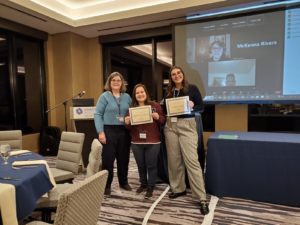
The winners of the oral competition this year are Leyi Zhou (1st), Natalie Mastick (2nd), and Bryan Gaspich (3rd). The poster presentation winners are Dayne Darlen Lezame-Balderrama (1st), McKenna Rivers (2nd), and Aubrey Emmi (3rd). 


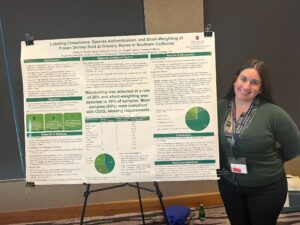
Labeling Compliance, Species, Authentication, and Short Weighting of Frozen Shrimp Sold in Grocery Stores in Southern California. 

Second place poster presentation winner McKenna Rivers titled her project “Labeling Compliance, Species, Authentication, and Short Weighting of Frozen Shrimp Sold in Grocery Stores in Southern California.” 

Her objective was to examine species labeling, glazing, net weight, and compliance with country-of-origin labeling (COOL) regulations for frozen, uncooked shrimp sold in Southern California. By collecting 106 shrimp products from 37 grocery stores licensed under PACA, Rivers concluded that mislabeling was detected at a rate of 26% and short-weighting was detected in 36% of samples, though most samples had high rates of compliance with COOL labeling requirements. 

McKenna Rivers, 2nd place winner, Chapman University


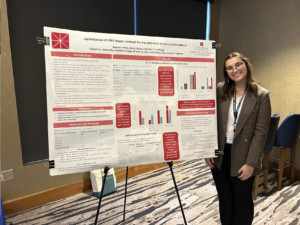
“Optimization of DNA-based Methods for the Detection of Canned Tuna Species” 

Third-place winner Aubrey Emmi titled her project, “Optimization of DNA-based Methods for the Detection of Canned Tuna Species.” Her objective was to compare four different DNA extraction methods for use with canned tuna products and determine how the substance the tuna is packaged in (oil or water) affects DNA extraction. Using DNA extraction methods and PCR and DNA sequencing, Emmi concluded that the DNeasy and Mericon methods had the greatest sequencing success and that tuna packed in oil showed greater amplification success overall than tuna packed in water.  

Aubrey Emmi, 3rd place winner, Chapman University

Lisa Weddig, VP of Regulatory and Technical Affairs at NFI (left), Dayne Darlen Lezame-Balderrama, 1st place poster presentation winner (middle), and Aubrey Emmi, 3rd place poster presentation winner (right)


For more information on the event, visit http://pftfish.net/2023/programBook.pdf 

SIRF Supports the Next Generation of Seafood Researchers

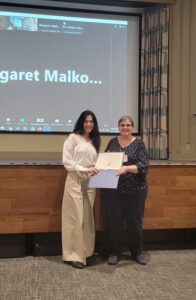
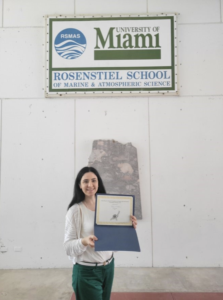
The fifth annual Atlantic and Gulf Seafood Technology Conference (AGSTC) was held at the University of Miami Rosenstiel School of Marine Atmospheric and Earth Science. The event included a student competition in which young researchers showcase work that aims to maintain the exchange of technical and scientific information on wild-caught fisheries and aquaculture in the region. The Seafood Industry Research Fund sponsored the student paper awards.

“The SIRF sponsorship of the student awards at the AGSTC is a fantastic opportunity to support talented graduate students doing seafood related research”, says NFI Director of Scientific Affairs, Margaret Malkowski. “Supporting the next generation is very important to the SIRF Board of Directors and sponsoring the student awards is a wonderful way to encourage them to seek out seafood industry related careers upon graduation.”
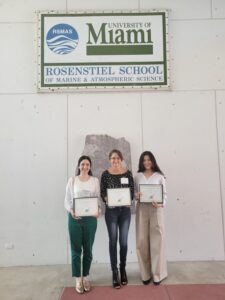
SIRF awards first, second, and third place prizes to three outstanding researchers. This year’s winners were Sara Schoen (1st), Sharon Chuah (2nd), and Rose Omidvar (3rd).

Rose Omidvar is a first-year Ph.D. Student conducting research under the supervision of Dr. Razieh Farzad on cell-based seafood production at the University of Florida. After being awarded 3rd place at AGSTC, she tells SIRF about the importance of her research.  

An important aspect of cellular agriculture is the impact it would have on the environment. Conducting life cycle analysis would provide insight into these impacts and it can help improve product development, scaling up the processes as well as helping regulatory agencies with their policy-making decisions”, says Omidvar. “Since we are at the very beginning steps of cell-based seafood production, I conducted an LCA analysis to compare the impact of cell-based salmon production with recirculating aquaculture salmon production”. Omidvar and peers said the conference gave them a chance to connect with peers with similar scientific interests.  

Omidvar continued, “Attending this conference helped me build connections with peers who work in the same field, receive the latest updates from FDA representatives on the seafood HACCP and safety, and gain insight into the recent seafood industry advancements”, she says. “I would like to thank my Advisor for the encouragement and funding this trip, and SIRF for providing awards for students.”  


Rose Omidvar (left), Sara Schoen (middle), and Sharon Chuah (right)


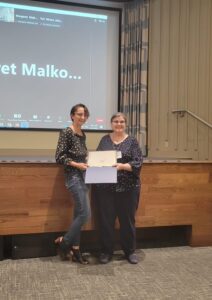
Sarah Schoen and Lisa Weddig


Sharon Chuah and Lisa Weddig


Rose Omidvar, PhD Student, University of Florida


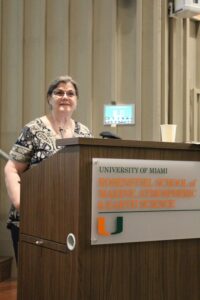
Lisa Weddig speaks at the Atlantic and Gulf Seafood Technology Conference


The 29th Annual Gorton Cup Raised $19,500 for SIRF

The Seafood Industry Research Fund (SIRF) Board would like to thank SEAFAX, Compass, Lineage Logistics and the players for organizing and participating in the Gorton Cup fundraiser.

How Irradiation of Finfish Improves Public Health

The word “irradiation” may bring up some negative connotations. However, in the realm of food and more importantly food safety, irradiation is a good thing in helping keep consumers healthy and extend the shelf life to reduce food waste. Irradiation is a process highly used with consumer proteins and veggies such as: beef, pork, lettuce, and spinach. However, Dr. Robert Smith from NOVA Southeastern University, a trained microbiologist, wants to add another one to the list: finfish.

Roughly two years ago, Dr. Smith was approached to help lead research that further understood the effects of irradiation of finfish in hopes of the Food and Drug Administration approving this method for finfish. “[They approached me] because there were some outstanding concerns about whether irradiation might pose a microbiological risk [to this seafood category].”

Research That Aims to Move U.S. Regulations

At first, Smith wanted to see the effects on different substrates and foods, but the FDA insisted that they wanted to see it in finfish. “The reasoning was that because we are a Vitamin D deficient society.” Smith said, “Finfish represents one of the only excellent sources of Vitamin D in people’s diet, so they wanted to absolutely ensure there is no effect on it.”

“[The FDA] wants to see it in the specific item you intend to irradiate. Certainly, things like Mollusks and Crustaceans that don’t have a lot of vitamin D, we could in theory apply this knowledge to them because they are compositionally similar.” But, seafood is diverse, that’s why it’s important to test each category.

Smith said, “In all the meetings I’ve had with them (FDA) they have been extremely on point; they look and consider everything. On two separate occasions I’ve met them virtually and presented ideas on how to extract, sample size, types of finfish, how many doses of irradiation would convince them, etc. and a lot of the approach that we’ve put into this award was their advice.”

One important piece of the FDA’s assistance was what type of finfish to actually use for the project. Considering there are so many variations of finfish, there were a lot of options to choose from. “I believe their thought process was to pick the most highly consumed finfish in North America and combine that with the ones with the highest amount of vitamin D.” Dr. Smith said, that safeguarded them in two ways. For one, any drop would have a significant impact on the health of the average American. Second, by choosing something that was high in Vitamin D, it would not be due to a technical error.”

How it all works:

Testing the effects of Vitamin D on food is not unique as researchers have done this; but certainly, testing the effects of Vitamin D on finfish has not been done before, especially on this scale. “When we are doing a control experiment, we were trying to one, detect vitamin D, and two, that we were recovering as much Vitamin D as possible. What we did was take some finfish, put some Vitamin D in it. We then extracted what we thought was Vitamin D and we compared what we put in initially to what we got out at the end to again make sure that we could recover vitamin D and determine the amount of loss during the extraction process.”

These experiments show two things for Dr. Smith and his research. It shows that one, the experiments he performs are working, and two, it shows if he needs to change or alter anything to reduce loss with the finfish.

Looking Ahead

The reality is much of the food Americans consume is actually irradiated. For example, chicken and mollusks are proteins approved for irradiation in the U.S. and is arguably, widely unknown by shoppers as labeling is only required for retail.

This specific  type of irradiation does not change the finfish, in fact, it enhances food safety and further protects the consumer from pathogenic bacteria that could otherwise  cause a significant infection in someone.

The major benefit for the public is that it makes food safer, while preserving the Vitamin D needed for a deficient customer-base. Dr. Smith said, “I’m really excited about what we are getting out of the lab right now as it’s showing a minimal drop of vitamin D which is fantastic even at high levels of irradiation, this means that we have a very high safety net.”

Dr. Smith emphasized “This also presents a huge opportunity for the public to make their finfish safer without changing how it looks, smells, tastes and more.”

For more information on SIRF and our other funded projects, you can learn more here: www.SIRFonline.org

Looking at Fish Identification through a Data Lens

Identifying fish is harder than you would think, and because of this, it will take decades to track down and categorize every species of fish. However, Dr. Dan Distel and Hannah Appiah-Madson from Northeastern University are simplifying this incredible hurdle with the Ocean Genome Legacy Center; where they are building a database to categorize snapper as well as other commercially sold seafood species.

The origin for this concept comes from a 2000 editorial from “Science of the Year” where they asked the question, “Why weren’t we saving the DNA of endangered species.”  Distel said, “What we decided to do was to create a taxonomically, geographically, and ecologically diverse collection of marine organisms, tissues, and DNA samples. We opted to try to make those samples available as freely as possible to the research community.”

In 2008, they began to start loaning samples to museums in the local area, and now have grown to having loaned over 7000 samples.

“Our main goal rather than to just squirrel these samples away forever is to try and get these samples used to promote research, because our feeling is that we need [knowledge] to protect the environment. We need to know what’s out there and what we can do to protect it.”

In 2017, two researchers from Brandeis University reached out to Distel’s team to provide fish samples for their new technology named FASTFISH-ID, a more efficient and faster way for  fish  species authentication. Soon, a collaboration was formed between both teams, which led Dr. Distel to the Seafood Industry Research Fund (SIRF) for funding. “We reached out to SIRF and applied for a grant to do two things.” Distel said, “One was to build a reference collection of validated tissue and DNA samples that could be used not only to validate this method but any method of seafood identification. Two was to validate FASTFISH-ID’s s performance.”


Findings: Snapper is easily misidentified, even by museums

With FASTFISH-ID technology, the research project was going swimmingly. “The FASTFISH-ID chemistry seemed to be pretty robust. It appeared to be reproduceable, and it appeared to be capable of differentiating closely related fish species.”

With this new and extremely helpful technology in their hands, Dr. Distel focused on snapper for one key reason: it is easily misidentified.  “Within the market name “snapper” there are specific names like red snapper, and so, it is difficult to apply these names correctly and it’s difficult to evaluate whether these names have been identified correctly in the marketing environment. Our idea was to reach out and get validated specimens from museums, presuming that these would be the gold standard for identification.”

However, Dr. Distel ran into a hurdle. The “gold standard” samples he received from the lab had a a small amount of errors with no clear reason why these errors occurred. “We couldn’t tell if those errors were due to mislabeling of samples or if the [samples] were too difficult to tell apart.”

He said, “Our sleuthing into databases gave us pretty strong indications that there are certain species that are very hard to tell apart and even experts were misnaming these species. We found a lot of crossover which showed it was even hard for these experts.”


The Importance of Data Integrity

Nature doesn’t care whether it’s easy to tell apart or not. It’s only people that care about telling them apart. That’s one of the biggest issues that this research project has is confirming the data, and more specifically, making sure it holds up in the future. Taxonomy is a dynamic science and what belongs in which taxonomic group changes over time.

Dr. Distel explained, “What we wanted to do was build a method that allows our classifications to evolve as our data evolves and also gives us quantitative measures of what is the center and the boundaries of these clusters. To test accuracy, the real thing is what does it agree with, what is accepted by both scientists and the industry as proper classification of these taxon.”

“In that way as the database grows, our ideas of what the boundaries of what these natural groups are gets better and better. What we are looking for is to define those boundaries of those natural clusters that appear in the data.”


Mislabeling Has a Global Impact

The impact of Ocean Genome Legacy   is something of importance for Dr. Dan Distel and his team, who want their work to prevent mislabeling and fraud within the seafood marketplace. For them, consumer confidence in the products they buy is extremely important.  “Mislabeling has a fairly large cost, it costs consumers because they potentially get a product they didn’t want or is a lower value than the product they wanted. It has health implications because it prevents consumers from knowing what they are purchasing and making good purchasing decisions.

“It’s a crime to sell something’s that has been mislabeled.” Dr. Dan Distel said. “There are good actors out there who want to make sure they are doing the right thing, and there are bad actors who are just trying to rip people out. We want to help out the former group and hurt the latter group.”

“There’s a real appetite in all aspects of the seafood industry to improve sustainability and consumer confidence in their products, which provides a market for these products.”

For more information on SIRF and our other funded projects, you can find more here: www.SIRFonline.org


Using Seafood Byproduct in New Ways

With the global population expected to reach nearly 10 billion people by 2050, the world — more than ever — will need access to both healthy and affordable proteins. This will require a path that innovates food and its production — like increasing the underutilization of discarded seafood resources.

Can the seafood industry better utilize by-product?

Dr. Jung Y Kwon, an assistant professor at Oregon State University, is researching how to create high protein, nutritious, and consumer-friendly food products from byproducts for the seafood industry.

Better utilization of Byproduct is a known challenge for seafood, Dr. Kwon said. “[This is] a big part of the seafood industry and not everyone has the infrastructure or resources to do that. Because of this, a big part of byproducts is then discarded or not utilized. This problem is happening all over the world.”

With that in mind, Dr. Kwon wanted to take on both issues at once, reducing food waste and creating protein-rich products that can address growing food insecurity. “Food supply is a process that really puts a strain on the global ecosystem, so we need to find a way to feed these populations sustainably.” Dr. Kwon said. “Using the underutilized resources would be the best way to solve that problem as we do not have an effective way currently to use these resources.  Tying both [challenges] together and making it something more sustainable and valuable was something that could not be overlooked.”

Where are we now?

Dr. Kwon has one important philosophy: ‘no stone unturned.’ Due to this, she has split up her overall research plan into three stages, where each step leads into the next until the project is done. “We are currently working with several different byproduct parts separately to see if one part will be easier for this type of process to be applied than others. The frame and the heads have been giving us the most promising data.” Kwon said, “We are hopeful that we can further optimize the process and get some decent quality and purity from these protein extracts.”

Dr. Kwon has her eyes on the future and a new end-product for the seafood industry. She doesn’t want to replace any current seafood products but create a new stream of potentially novel seafood products or add another source of nutrition. “We are picturing a protein supplementary type of material that can be added to products so it can have a higher level of protein,” she responded. “For example, our lab created surimi noodles which incorporated seafood protein into the noodles to give them a higher amount of protein. But we are still finding the best way to incorporate the material that will be created.”

The Goal of Feeding Consumers

With any consumer-minded research, the main point of uneasiness is in whether consumers will accept the product and use it one day. Still, Dr. Kwon is extremely optimistic. “At the end of the day, we want to create a product that is usable and feasible to the consumers so it can be commercialized after the project is completed. Consumers are looking for more novel and sustainable food.”

Seafood’s Role in Advancing the Industry

For Dr. Kwon, private-public funding with the support of the Seafood Industry Research Fund (SIRF) was vital. “This project was only possible because of the private-public relationships.” Dr. Kwon said. “50% of our funding comes from the federal government and the other 50% from matching sources, such as SIRF, that makes the project possible.

“Without these partnerships or support it would be hard to keep the project going. It continues to be important as it really shows that it is a key issue for the industry, and we want to do a study that is relevant to the current industry and society.”

With this research and the partnership of SIRF, seafood can continue to be at the center of feeding a growing population while decreasing food waste around the world.  For more information on SIRF and our other funded projects, www.SIRFonline.org

SIRF Announces Ed Morey Memorial Fund

The Seafood Industry Research Fund (SIRF) Board of Directors has unanimously approved the formation of the Ed Morey, Founder, Morey’s Fish Company, Memorial Fund. The fund honors Mr. Morey’s leadership within the seafood industry as well as his support for seafood research.

SIRF September 2019 Meeting Recap

The SIRF Board met in September 2019 covering a full agenda for the seafood research organization. Items included planning for fundraising events, reporting on ongoing projects and discussion of project proposals. Watch the video for a recap of the meeting.