Category: Research

Looking at Fish Identification through a Data Lens

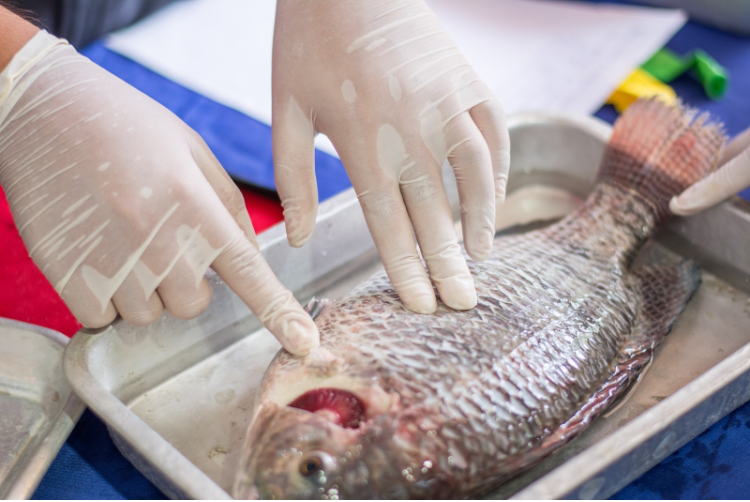
Identifying fish is harder than you would think, and because of this, it will take decades to track down and categorize every species of fish. However, Dr. Dan Distel and Hannah Appiah-Madson from Northeastern University are simplifying this incredible hurdle with the Ocean Genome Legacy Center; where they are building a database to categorize snapper as well as other commercially sold seafood species.

The origin for this concept comes from a 2000 editorial from “Science of the Year” where they asked the question, “Why weren’t we saving the DNA of endangered species.”  Distel said, “What we decided to do was to create a taxonomically, geographically, and ecologically diverse collection of marine organisms, tissues, and DNA samples. We opted to try to make those samples available as freely as possible to the research community.”

In 2008, they began to start loaning samples to museums in the local area, and now have grown to having loaned over 7000 samples.

“Our main goal rather than to just squirrel these samples away forever is to try and get these samples used to promote research, because our feeling is that we need [knowledge] to protect the environment. We need to know what’s out there and what we can do to protect it.”

In 2017, two researchers from Brandeis University reached out to Distel’s team to provide fish samples for their new technology named FASTFISH-ID, a more efficient and faster way for  fish  species authentication. Soon, a collaboration was formed between both teams, which led Dr. Distel to the Seafood Industry Research Fund (SIRF) for funding. “We reached out to SIRF and applied for a grant to do two things.” Distel said, “One was to build a reference collection of validated tissue and DNA samples that could be used not only to validate this method but any method of seafood identification. Two was to validate FASTFISH-ID’s s performance.”


Findings: Snapper is easily misidentified, even by museums

With FASTFISH-ID technology, the research project was going swimmingly. “The FASTFISH-ID chemistry seemed to be pretty robust. It appeared to be reproduceable, and it appeared to be capable of differentiating closely related fish species.”

With this new and extremely helpful technology in their hands, Dr. Distel focused on snapper for one key reason: it is easily misidentified.  “Within the market name “snapper” there are specific names like red snapper, and so, it is difficult to apply these names correctly and it’s difficult to evaluate whether these names have been identified correctly in the marketing environment. Our idea was to reach out and get validated specimens from museums, presuming that these would be the gold standard for identification.”

However, Dr. Distel ran into a hurdle. The “gold standard” samples he received from the lab had a a small amount of errors with no clear reason why these errors occurred. “We couldn’t tell if those errors were due to mislabeling of samples or if the [samples] were too difficult to tell apart.”

He said, “Our sleuthing into databases gave us pretty strong indications that there are certain species that are very hard to tell apart and even experts were misnaming these species. We found a lot of crossover which showed it was even hard for these experts.”


The Importance of Data Integrity

Nature doesn’t care whether it’s easy to tell apart or not. It’s only people that care about telling them apart. That’s one of the biggest issues that this research project has is confirming the data, and more specifically, making sure it holds up in the future. Taxonomy is a dynamic science and what belongs in which taxonomic group changes over time.

Dr. Distel explained, “What we wanted to do was build a method that allows our classifications to evolve as our data evolves and also gives us quantitative measures of what is the center and the boundaries of these clusters. To test accuracy, the real thing is what does it agree with, what is accepted by both scientists and the industry as proper classification of these taxon.”

“In that way as the database grows, our ideas of what the boundaries of what these natural groups are gets better and better. What we are looking for is to define those boundaries of those natural clusters that appear in the data.”


Mislabeling Has a Global Impact

The impact of Ocean Genome Legacy   is something of importance for Dr. Dan Distel and his team, who want their work to prevent mislabeling and fraud within the seafood marketplace. For them, consumer confidence in the products they buy is extremely important.  “Mislabeling has a fairly large cost, it costs consumers because they potentially get a product they didn’t want or is a lower value than the product they wanted. It has health implications because it prevents consumers from knowing what they are purchasing and making good purchasing decisions.

“It’s a crime to sell something’s that has been mislabeled.” Dr. Dan Distel said. “There are good actors out there who want to make sure they are doing the right thing, and there are bad actors who are just trying to rip people out. We want to help out the former group and hurt the latter group.”

“There’s a real appetite in all aspects of the seafood industry to improve sustainability and consumer confidence in their products, which provides a market for these products.”

For more information on SIRF and our other funded projects, you can find more here: www.SIRFonline.org
 

Using Seafood Byproduct in New Ways

With the global population expected to reach nearly 10 billion people by 2050, the world — more than ever — will need access to both healthy and affordable proteins. This will require a path that innovates food and its production — like increasing the underutilization of discarded seafood resources.

Can the seafood industry better utilize by-product?

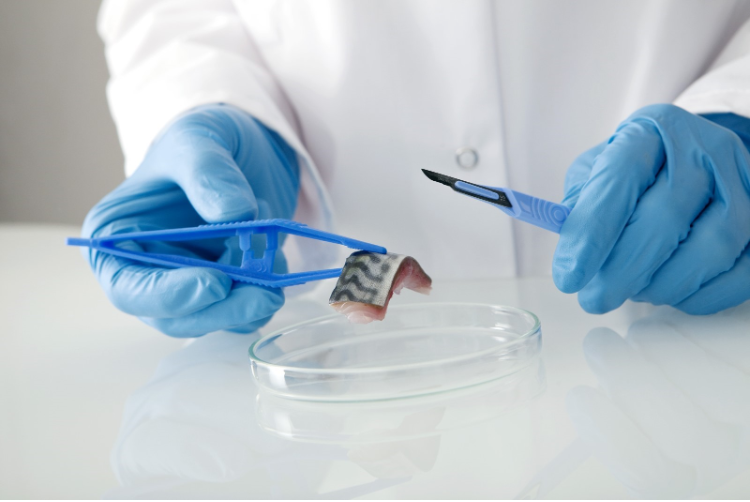
Dr. Jung Y Kwon, an assistant professor at Oregon State University, is researching how to create high protein, nutritious, and consumer-friendly food products from byproducts for the seafood industry.

Better utilization of Byproduct is a known challenge for seafood, Dr. Kwon said. “[This is] a big part of the seafood industry and not everyone has the infrastructure or resources to do that. Because of this, a big part of byproducts is then discarded or not utilized. This problem is happening all over the world.”

With that in mind, Dr. Kwon wanted to take on both issues at once, reducing food waste and creating protein-rich products that can address growing food insecurity. “Food supply is a process that really puts a strain on the global ecosystem, so we need to find a way to feed these populations sustainably.” Dr. Kwon said. “Using the underutilized resources would be the best way to solve that problem as we do not have an effective way currently to use these resources.  Tying both [challenges] together and making it something more sustainable and valuable was something that could not be overlooked.”

Where are we now?

Dr. Kwon has one important philosophy: ‘no stone unturned.’ Due to this, she has split up her overall research plan into three stages, where each step leads into the next until the project is done. “We are currently working with several different byproduct parts separately to see if one part will be easier for this type of process to be applied than others. The frame and the heads have been giving us the most promising data.” Kwon said, “We are hopeful that we can further optimize the process and get some decent quality and purity from these protein extracts.”

Dr. Kwon has her eyes on the future and a new end-product for the seafood industry. She doesn’t want to replace any current seafood products but create a new stream of potentially novel seafood products or add another source of nutrition. “We are picturing a protein supplementary type of material that can be added to products so it can have a higher level of protein,” she responded. “For example, our lab created surimi noodles which incorporated seafood protein into the noodles to give them a higher amount of protein. But we are still finding the best way to incorporate the material that will be created.”

The Goal of Feeding Consumers

With any consumer-minded research, the main point of uneasiness is in whether consumers will accept the product and use it one day. Still, Dr. Kwon is extremely optimistic. “At the end of the day, we want to create a product that is usable and feasible to the consumers so it can be commercialized after the project is completed. Consumers are looking for more novel and sustainable food.”

Seafood’s Role in Advancing the Industry

For Dr. Kwon, private-public funding with the support of the Seafood Industry Research Fund (SIRF) was vital. “This project was only possible because of the private-public relationships.” Dr. Kwon said. “50% of our funding comes from the federal government and the other 50% from matching sources, such as SIRF, that makes the project possible.

“Without these partnerships or support it would be hard to keep the project going. It continues to be important as it really shows that it is a key issue for the industry, and we want to do a study that is relevant to the current industry and society.”

With this research and the partnership of SIRF, seafood can continue to be at the center of feeding a growing population while decreasing food waste around the world.  For more information on SIRF and our other funded projects, www.SIRFonline.org

SIRF Announces Ed Morey Memorial Fund

The Seafood Industry Research Fund (SIRF) Board of Directors has unanimously approved the formation of the Ed Morey, Founder, Morey’s Fish Company, Memorial Fund. The fund honors Mr. Morey’s leadership within the seafood industry as well as his support for seafood research.

SIRF September 2019 Meeting Recap

The SIRF Board met in September 2019 covering a full agenda for the seafood research organization. Items included planning for fundraising events, reporting on ongoing projects and discussion of project proposals. Watch the video for a recap of the meeting.

SIRF Director’s Testimonial

SIRF is guided by a board of industry leaders. This team guides SIRF’s mission forward by improving the seafood industry with innovative research. In this video, learn from SIRF directors what they value about the seafood research organization.

Dr. Aquiles Sanchez – FASTFISH-ID

Dr. Aquiles Sanchez (Thermagenix, Brandeis University) details his SIRF-sponsored research. FASTFISH-ID is a fast, cost-effective fish identification device that can be used as a more accessible alternative to traditional lab DNA testing.

Dr. Dan Distel – DNA Bank

Dr. Dan Distel (Northeastern University) details his SIRF-sponsored research — a public DNA bank to support technology development for seafood identification and authentication.

Crab Enhancement Research

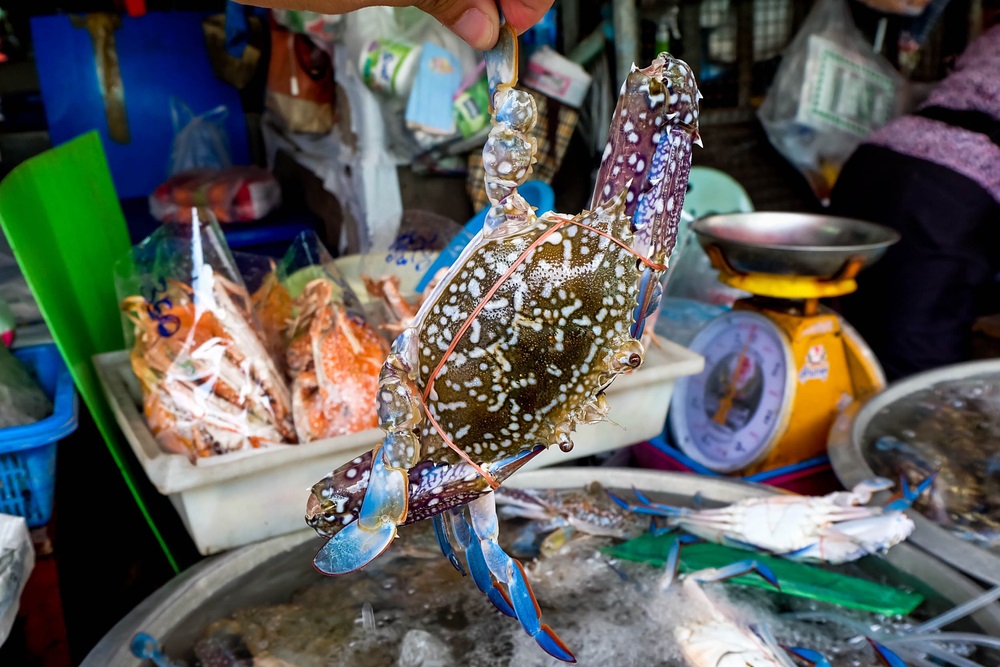
Dr. Yoni Zohar with the University of Maryland Baltimore County and director of the Aquaculture Research Center at the Institute of Marine and Environmental Technology has co-authored a paper on Crab Enhancement. “Stock Enhancement: Strategic Approach for the Blue Swimmer Crab in SE Asia” profiles various approaches to bolstering crab populations through hatchery raised stocks and recommends best practices. Learn more about how this innovative practice can contribute to crab sustainability.

Improving Aquaculture at Virginia Tech

Dr. David Kuhn, a SIRF-sponsored researcher at Virginia Tech, provides a detailed look into his antibody fish farming research.  Outlining the methods of his study, Dr. Kuhn hopes the project will lead to developments preventing large-scale disease outbreaks and economic loss within the aquaculture industry.  As the first study of its kind performed on fish, the project’s success will be gaged by the antibody’s ability to protect fish from infection. Next research steps include determining dosage, economic feasibility of antibody treatment and a testing of other fish species.