
Pregnant women rely on numerous vitamins and nutrients to support their babies’ development. One such nutrient is Docosahexaenoic acid (DHA), an Omega-3 fatty acid found in seafood that supports fetuses’ neurological development and lowers the risk of preterm labor. While DHA plays a vital role in the health of pregnant women and their children, not all people have access to it, especially those living under socioeconomic constraints in rural areas. One University of Kansas researcher received a grant from the Seafood Industry Research Fund (SIRF) to identify gaps in current research.
Dr. Danielle Christifano is an assistant professor in the Department of Dietetics and Nutrition. Her research focuses on maternal and infant nutrition. Through the SIRF grant, she and her team studied the rates of DHA consumption among people who participate in the Special Supplemental Nutrition Program for Women, Infants, and Children (WIC) residing in Kansas.

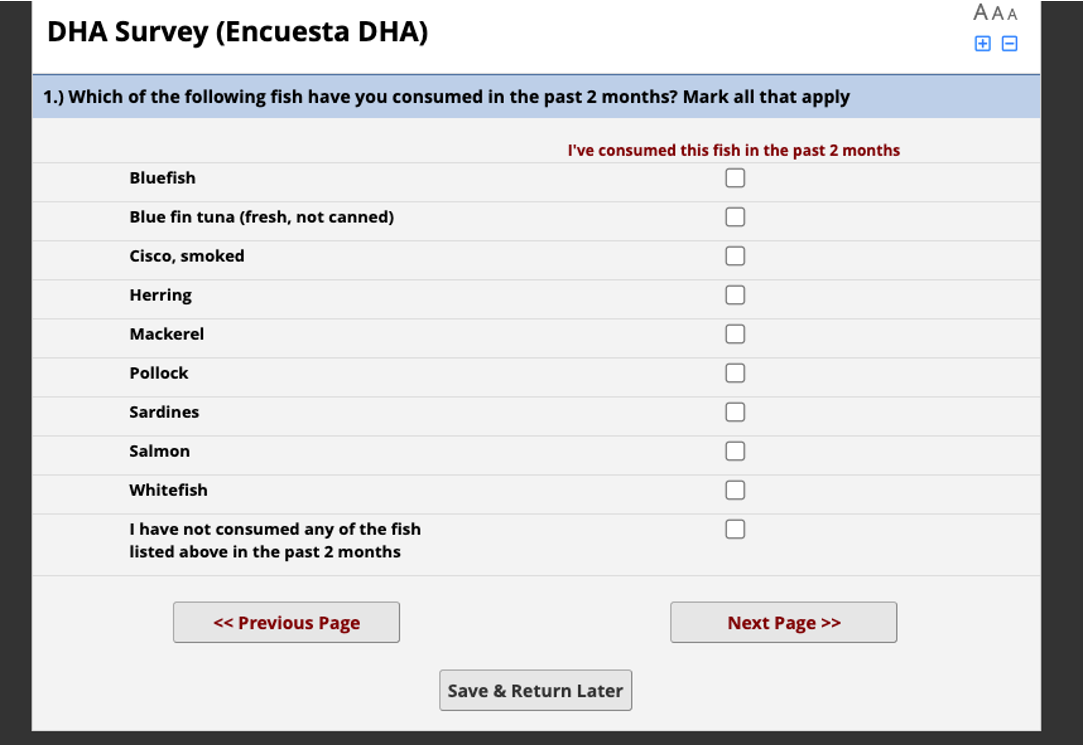
From June 2023 to May 2026, Christifano and her team collected data from a seven-question Food Frequency Questionnaire (FFQ) in the WICShopper app to gauge WIC clients’ DHA consumption. The survey was also advertised on flyers in Kansas WIC clinics, which serve about 44,000 clients across 102 counties, many of them in rural areas. The survey asked about the types and amounts of seafood and eggs participants had consumed in the past two months.
Formal testing for DHA intake examines red blood cell phospholipids, which is a time-consuming and expensive process. WIC clients are less likely to have access to testing, which makes the DHA FFQ a more accessible way for them to monitor their DHA consumption. Outside of maternal nutrition, Christifano believes tools like the FFQ could be used for programs like the USDA Child Nutrition programs.
“The trick is really trying to find something that is low-burden, low-cost, low-time effort for the staff but could be hugely beneficial for the clients,” Christifano said.
Prior to Christifano’s study, the most recent WIC-specific Omega-3 intervention was published in 2005 in Colorado called “Omega-3 for Baby and Me.” The program aimed to create widely accessible materials to increase DHA intake during pregnancy. It also included educational materials about shopping lists and recipes with DHA-rich foods, like tuna and salmon. For Christifano, her study serves as an avenue to expand upon preexisting research.
“This is a population that may face even greater barriers to accessing seafood or dietary supplements, which are the primary sources of DHA in the diet,” Christifano said. “Prior research really has not identified this group as a group of focus for this particular nutrient, so this seems novel in this way, but we think this is really important because the amount of DHA that’s found in breastmilk is really influenced by a mother’s diet.”
Between the start of the study in June 2023 and September 2025, Christifano’s team collected 571 surveys. As of May 2026, they had 772 completed surveys. Between 2023 and 2025, the surveys concluded that pregnant participants consumed 166.1 milligrams DHA per day on average, breastfeeding participants consumed approximately 134 mg DHA per day and participants planning to become pregnant consumed about 119.4 mg DHA per day.
Most babies consume DHA through their mother’s breastmilk. The World Health Organization and the Food and Agriculture Organization recommend women of childbearing age consume at least 250 mg DHA per day and 1,000 mg per day for women with low DHA intake.

All measured groups in Christifano’s study were significantly under the recommended amount of daily DHA consumption.
Although official state and federal policies encouraging DHA consumption are still not fully implemented, some organizations like WIC have established different interventions to increase clients’ DHA intake. In Kansas, pregnant and postpartum clients now receive 10 ounces of canned fish in their monthly food packages, fully lactating clients receive 20 ounces, and partially lactating clients receive 15 ounces.
Christifano believes her team’s research could be used to reinforce existing policies helping pregnant and breastfeeding women meet the recommended amount of DHA consumption.
“Our goal is never to change policy overnight but rather to like provide data and do the research that helps us get to the point of making decisions about nutrition education, resource allocation, (and) strategies to improve maternal and infant health outcomes overall,” Christifano said.
For Christifano, the study is an opportunity for further research into pregnant and breastfeeding women’s DHA intake. Going forward, she hopes to increase education about the importance of DHA for WIC clients.
“I think we’re just super honored to be able to do the work that we do, and we really care about … the health and wellbeing of mothers, babies, and families and so anything that we can do especially with low-burden, low-cost interventions like nutrients to improve outcomes is something that we are super invested in doing in our lab,” Christifano said.
By Haley Richardson, SIRF intern